

What Health Benefits Does Dairy Offer Your Body?

Lactose Intolerance
 Lactose is a sugar that is naturally found in dairy foods and breast milk. Lactose intolerance in children is rare. As you age, everyone tolerates lactose differently.

When to Introduce Dairy
 Leading health experts agree water and plain milk are the only recommended beverages for children 1 to 5 years of age.

FAQs About Dairy
 Dairy FAQs
Important nutrients for immune health, growth and development
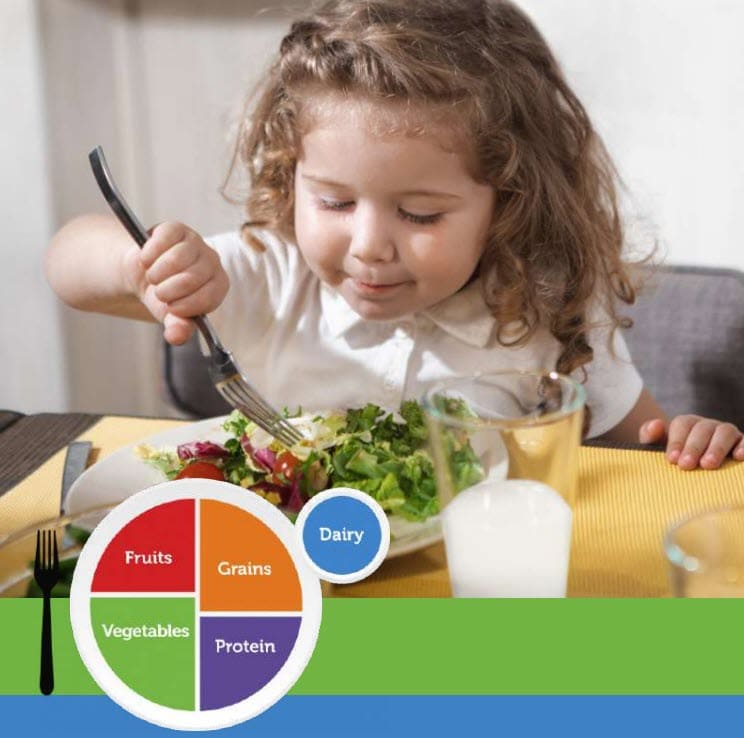
Dairy Essential Nutrients
 Supporting Growth and Development.
After their first birthday, as babies transition from human milk or iron-fortified infant formula, whole milk and other dairy foods

Fueling Bright Minds and Strong Bodies
 Bright Minds and Strong Bodies
Dairy has more bone-building nutrients than any other foodgroup.

Best Dairy Recipes of 2026
 This collection of summer recipes brings together ripe, seasonal ingredients with the rich, refreshing taste of milk, cheese, yogurt, and cream to create meals that are perfect for warm-weather dining.
Nutrition FAQs
FAQs About Dairy
-
7 of the 14 key nutrients for early brain development
-
More bone-building nutrients than any other food group
-
Important nutrients for immune health, growth and development


Fueling Bright Minds and Strong Bodies
Milk, cheese, and yogurt bring a tasty mix of nutrients that help young brains grow, build strong bones, and stay healthy. Dairy gives seven of the fourteen key nutrients for early development and more bone‑building power than any other food group.
Whether you are inspiring picky eaters, choosing milk for your toddler, trying a simple recipe, or learning when babies can enjoy dairy, these quick videos make it easy and fun to explore.
Tap the side arrows to go to the next video.
USDA-approved statements, Food and Nutrition Service.
All About Lactose Intolerance
Lactose Intolerance 101
How to Enjoy Dairy Foods with Confidence
Lactose is a sugar that is naturally found in dairy foods and breast milk. Lactose intolerance in children is rare. As you age, everyone tolerates lactose differently.
The good news is there are a variety of lactose-free and lower-lactose choices that deliver on taste and nutrition.
Amount of Lactose per Serving From Lowest to Highest
Lactose-free Dairy Milk  0g
0g
1 CUP (8 OZ) SERVING
Lactose-free dairy milk is real milk, just without lactose.
Butter  less than 1g
1 TBSP SERVING
Butter is made by separating milk from butter fat, so there are only trace amounts of lactose, if any.
Natural Cheeses  less than 1g
1.5 OZ SERVING
Due to the steps in cheese making and natural aging, natural cheese contains minimal amounts of lactose. Natural cheeses like Cheddar and mozzarella have less than 1 gram of lactose.
American Cheese  1.2g
1.2g
1 SLICE SERVING
American cheese is made from natural cheese, which contains minimal lactose.
Ricotta Cheese  1.9g
1.9g
1/4 CUP SERVING
This soft, natural cheese contains minimal amounts of lactose.
Cottage Cheese  3.2g
3.2g
1/2 CUP SERVING
Due to the steps in cheese making and curd separation, cottage cheese has a fraction of the lactose in milk. Lactose free options are also available.
Ice Cream  3.9g
3.9g
2/3 CUP SERVING
There are lactose-free dairy milk ice creams available.
Greek Yogurt  4.2g
4.2g
3/4 CUP SERVING
There is less lactose in Greek yogurt because the straining process removes some of the lactose.
Yogurt  5.7g
5.7g
3/4 CUP SERVING
The live cultures in yogurt help digest some of the lactose.
Kefir  8.5g
8.5g
1 CUP SERVING
The live cultures in fermented milk products help digest some of the lactose.
Buttermilk  9g
9g
1 CUP (8 OZ) SERVING
Due to the steps in making buttermilk and its acidity, it naturally contains less lactose than regular milk.
Dairy Milk  12.6g
12.6g
1 CUP (8 OZ) SERVING
Try small amounts of dairy milk in smoothies, on cereal or with meals. Having milk with solid foods helps slow digestion, which can mean it’s better tolerated.

Lactose content based on the Reference Amount Customarily Consumed (RACC) and data from FoodData Central: https://fdc.nal.usda.gov/ . Accessed October 2022. Ricotta lactose content based on Facioni MS et al. 2020, Di Costanzo M et al. 2020 and Food Standards Australia New Zealand. Detailed data is on file and available upon request.
Make Every Bite and Sip Count
Dairy Alternatives are Different Than Real Dairy Milk
There are now more varieties of plant beverages than ever and the nutrients can vary widely by brand. Some plant milks have added nutrients and many also contain added sugars, which are not recommended for young children.
What’s in Your Glass?
Choices are great, but they can be overwhelming.
This at-a-glance chart can help you understand what’s in your glass.

*Source: Circana Group, L.P. Multi-outlets and convenience stores. 52 week-period ending July 16, 2023.
(Dairy milk, unflavored (1%); Dairy Milk, Lactose-Free, unflavored (1%), unflavored almond, soy and oat beverages.)
1. IRI Total US -Multi Outlet + Conv 2022 YTD ending 5-22, based on U.S. average price of unflavored, private label milk, 1 gallon.
2. USDA, Agricultural Research Service. FoodData Central, 2019. https://fdc.nal.usda.gov/. Foundation Foods. FDC IDs: 746772, 2340766, 1999630, 1999631, 2257046. Accessed July 2023.
3. USDA, Agricultural Research Service. USDA, FDA and ODS-NIH Database for the Iodine Content of Common Foods Release 3.0 (2023).
4. Naturally occurring nutrients based on publicly available product ingredient lists. Accessed July 2023.
5. FDA’s Daily Value (DV) for potassium of 4700 mg is based on a 2005 DRI recommendation. In 2019, NASEM updated the DRI to 3400 mg.
These values are based on the 2019 DRI of 3400 mg.
Dairy Food Recommendations
Dairy is one of the five food groups recommended by MyPlate to enjoy every day. The Dairy Group includes milk, yogurt, cheese, lactose-free milk and fortified soy milk* and fortified soy yogurt*.

Daily Dairy Food Recommendations
*No longer receiving human milk or infant formula
Below are the recommended dairy servings for all ages and information on what counts as a serving of dairy.
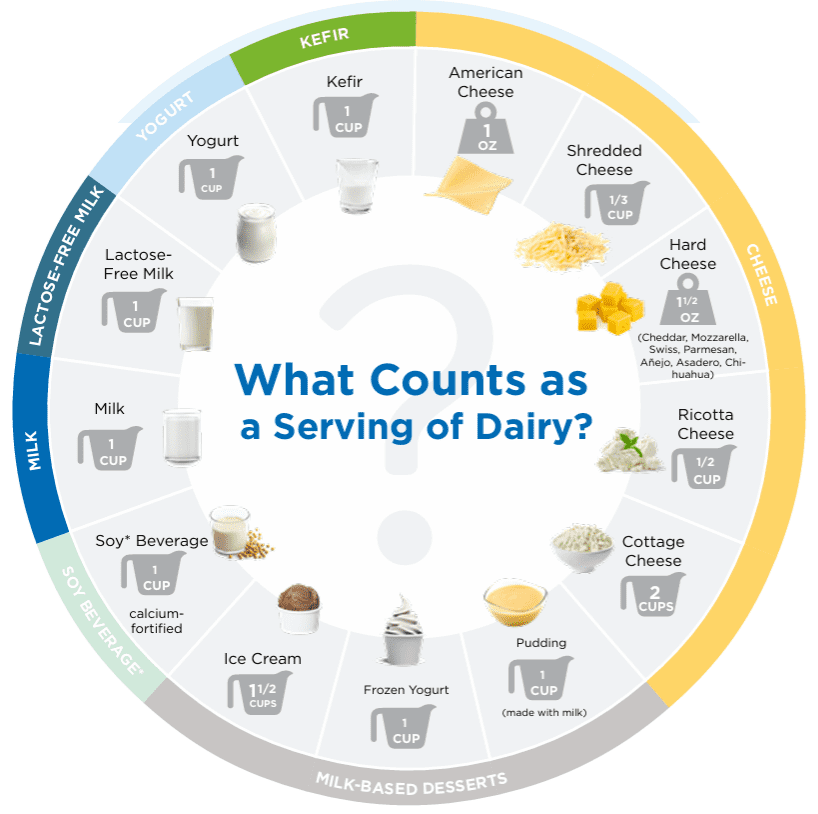
*Fortified soy beverages and yogurt are classified within the dairy group because their nutrition content is similar to that of dairy foods. Other plant based alternatives, such as almond or oat “milks,” are not included within the group because their nutrient composition is not equivalent to dairy foods.
Featured Dairy Recipes
