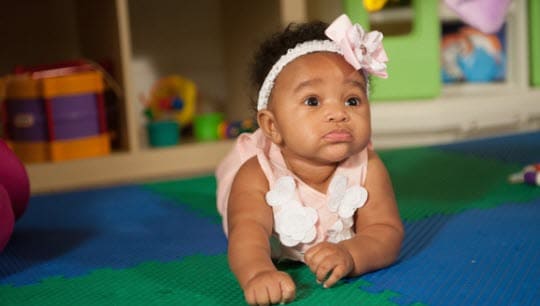
Milestones by 9 Months
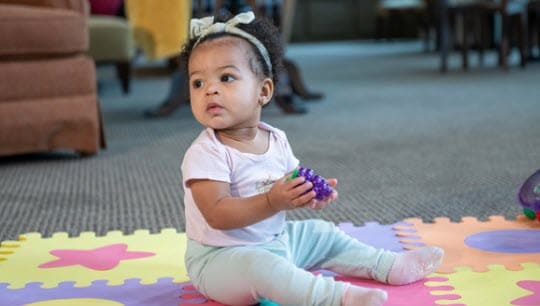
Milestones, tips, and images provided by CDC’s Learn the Signs. Act Early. Program.
Social/Emotional Milestones
Is shy, clingy, or fearful around strangers
Shows several facial expressions, like happy, sad, angry, and surprised


Looks when you call her name
Reacts when you leave (looks, reaches for you, or cries)
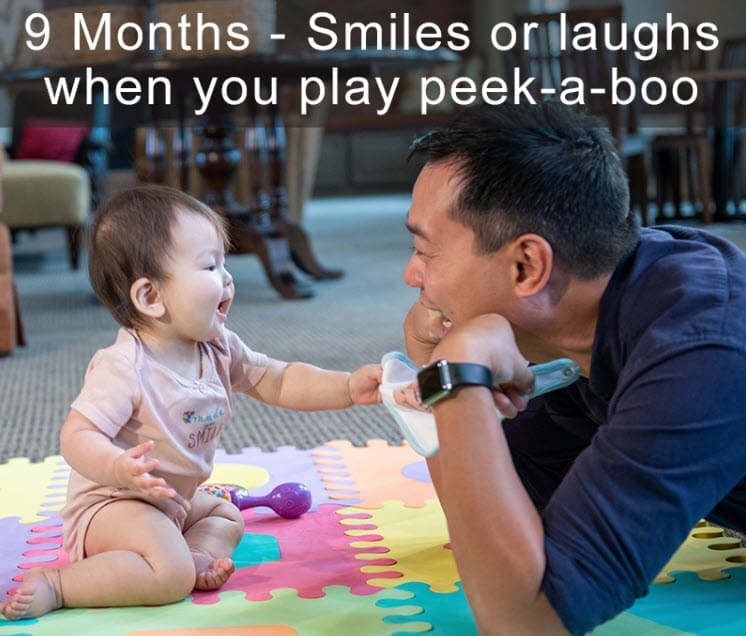
Smiles or laughs when you play peek-a-boo

Language/Communication Milestones
Makes a lot of different sounds like “mamamama” and “bababababa”
Lifts arms up to be picked up
Cognitive Milestones (learning, thinking, problem-solving)
Looks for objects when dropped out of sight (like his spoon or toy)
Bangs two things together
Movement/Physical Development Milestones
Gets to a sitting position by herself
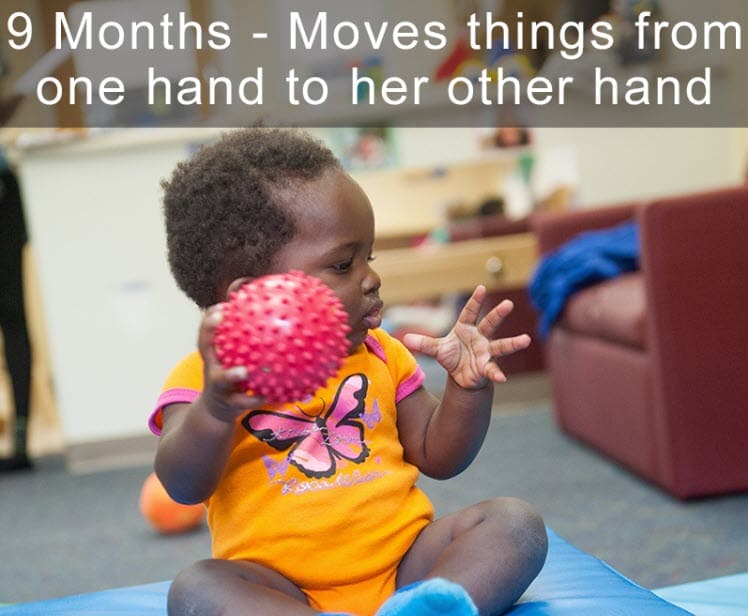
Moves things from one hand to her other
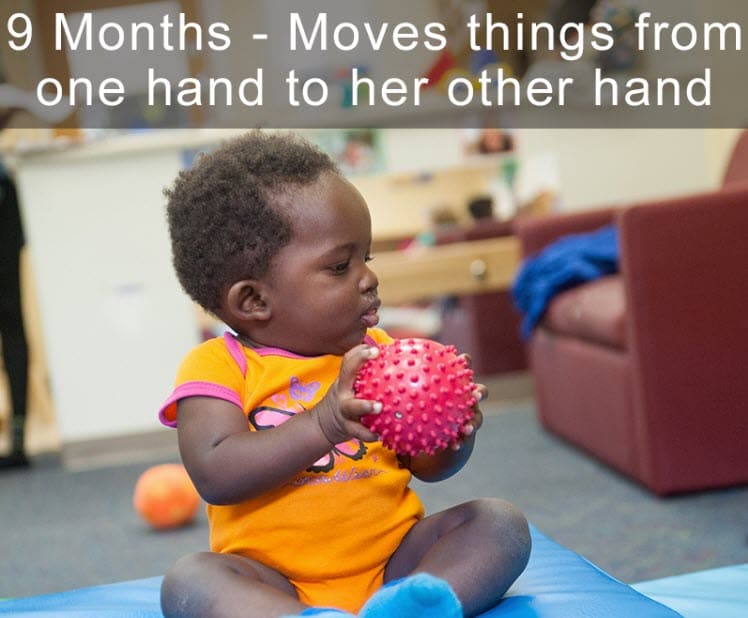
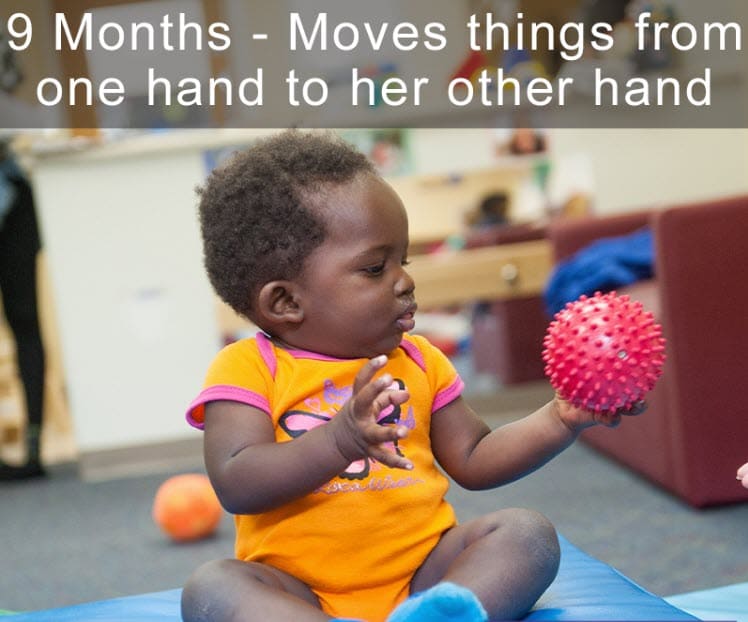
Uses fingers to "rake" food towards himself
Sits without support

Tips and Activities to Support Your Child’s Development at 9 Months
- Repeat your baby's sounds and say simple words using those sounds. For example, if your baby says "bababa," repeat "bababa," then say "book."
- Place toys on the ground or on a play mat a little out of reach and encourage your baby to crawl, scoot, or roll to get them. Celebrate when she reaches them.
- Teach your baby to wave "bye-bye" or shake his head "no." For example, wave and say "bye-bye" when you are leaving. You can also teach simple baby sign language to help your baby tell you what he wants before he can use words.
- Play games, such as peek-a-boo. You can cover your head with a cloth and see if your baby pulls it off.
- Play with your baby by dumping blocks from a container and putting them back in together.
- Play games with your baby, such as my turn, your turn. Try this by passing a toy back and forth.
- "Read" to your baby. Reading can be talking about pictures. For example, while looking at books or magazines, name the pictures as you point to them.
- Limit screen time (TV, tablets, phones, etc.) to video calling with loved ones. Screen time is not recommended for children younger than 2 years of age. Babies learn by talking, playing, and interacting with others.
- Find out about choking risks and safe foods to feed your baby. Let him practice feeding himself with his fingers and using a cup with a small amount of water. Sit next to your baby and enjoy mealtime together. Expect spills. Learning is messy and fun!
- Ask for behaviors that you want. For example, instead of saying "don't stand," say "time to sit."
- Help your baby get used to foods with different tastes and textures. Foods can be smooth, mashed, or finely chopped. Your baby might not like every food on the first try. Give her a chance to try foods again and again.
- Say a quick and cheerful goodbye instead of sneaking away so your baby knows you are leaving, even if he cries. He will learn to calm himself and what to expect. Let him know when you return by saying "Daddy's back!"
- Have routines for sleeping and feeding. Babies do better when they know what to expect.
- Stay close by as your baby explores and moves around your home so she knows that you are near.
- Make sure your baby gets enough sleep: 4- to 12-month-olds need 12 to 16 hours of sleep a day (including naps). Consistent sleep times make it easier!
- Take care of yourself. Parenting can be hard work! It is easier to enjoy your growing baby and be a loving parent when you feel good yourself.
- Make it a game when your baby drops things. Hand the item back to her so she can drop it again.
- Pay attention to the way he reacts to new situations and people; try to continue to do things that make your baby happy and comfortable.
- Describe what your baby is looking at; for example, "red, round ball."
- Play a game that teaches your baby to look for things she sees you hide, such as a toy under a blanket.
- Give your baby safe places to explore. Baby-proof your home. For example, move sharp or breakable things out of reach. Lock away medicines, chemicals, and cleaning products. Save the Poison Help Line number, 800-222-1222, in all phones.
- Use your words, facial expressions, and voice to show what you think your baby is feeling (sad, mad, happy). For example, tell him "You are sad, let's see if we can make you feel better."
- Put your baby close to things that she can pull up on safely.
Answer a few questions?
Select the age of your child to see their Milestones
6 Months
9 Months

1 Year

15 Months

18 Months

2 Years

30 Months

3 Years

4 Years

5 Years
2 Months