Milestones by 5 Years

Milestones, tips, and images provided by CDC’s Learn the Signs. Act Early. Program.
Social/Emotional Milestones
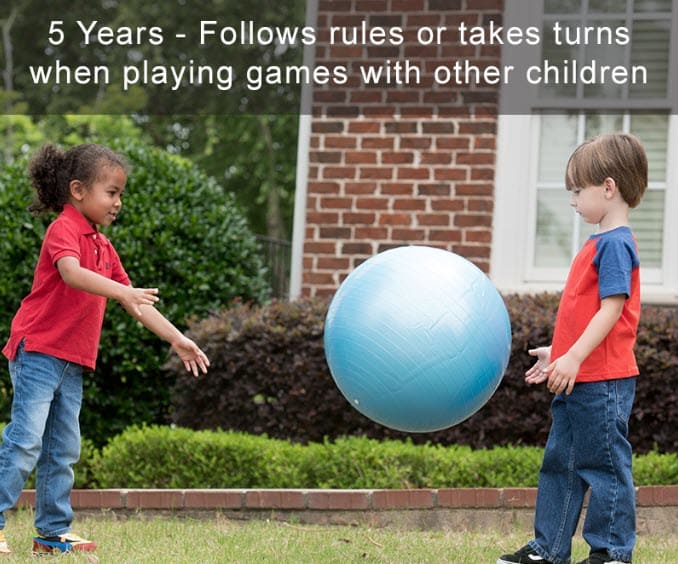
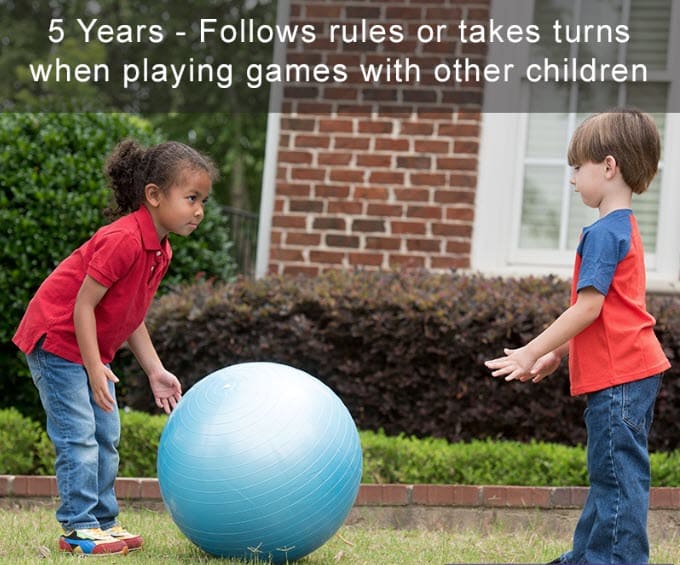
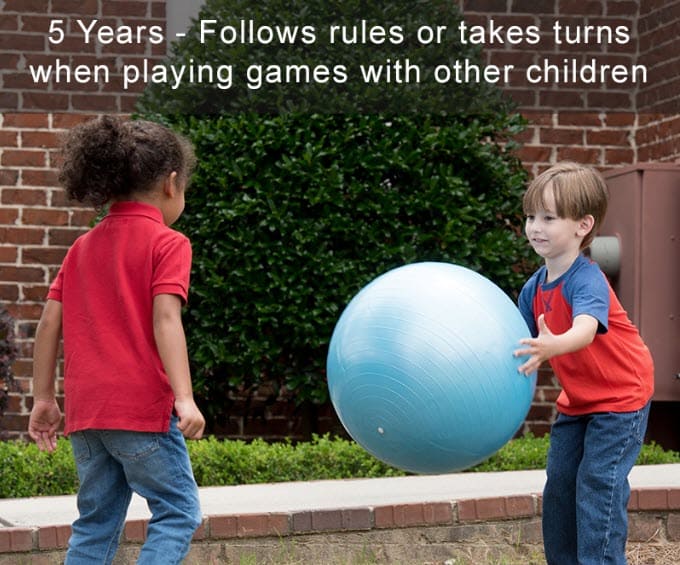
Follows rules or takes turns when playing games with other children
Sings, dances, or acts for you
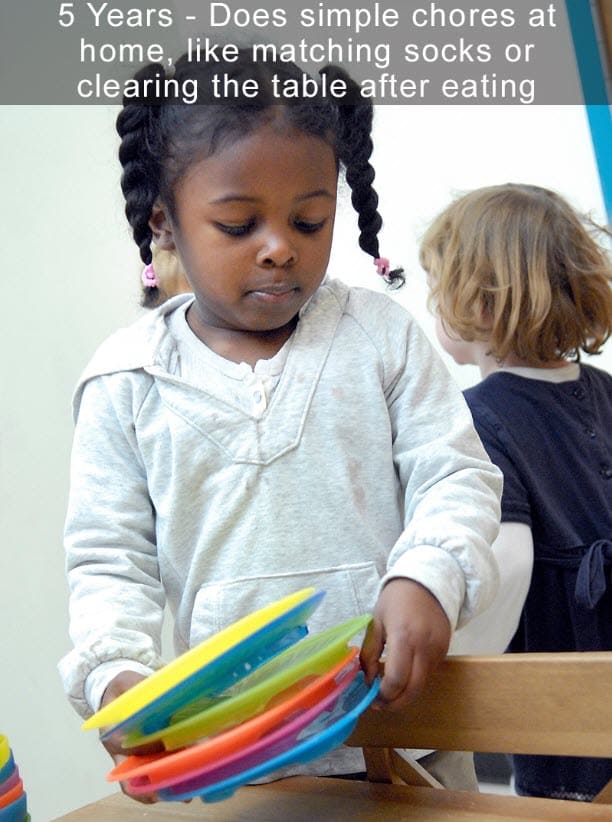
Does simple chores at home, like matching socks or clearing the table after eating
Language/Communication Milestones
Tells a story she heard or made up with at least two events. For example, a cat was stuck in a tree and a firefighter saved it
Answers simple questions about a book or story after you read or tell it to him
Keeps a conversation going with more than three back-and-forth exchanges
Uses or recognizes simple rhymes (bat-cat, ball-tall)
Cognitive Milestones (learning, thinking, problem-solving)
Counts to 10
Names some numbers between 1 and 5 when you point to them
Uses words about time, like “yesterday,” “tomorrow,” “morning,” or “night”
Pays attention for 5 to 10 minutes during activities. For example, during story time or making arts and crafts (screen time does not count)
Writes some letters in her name
Names some letters when you point to them
Movement/Physical Development Milestones
Buttons some buttons
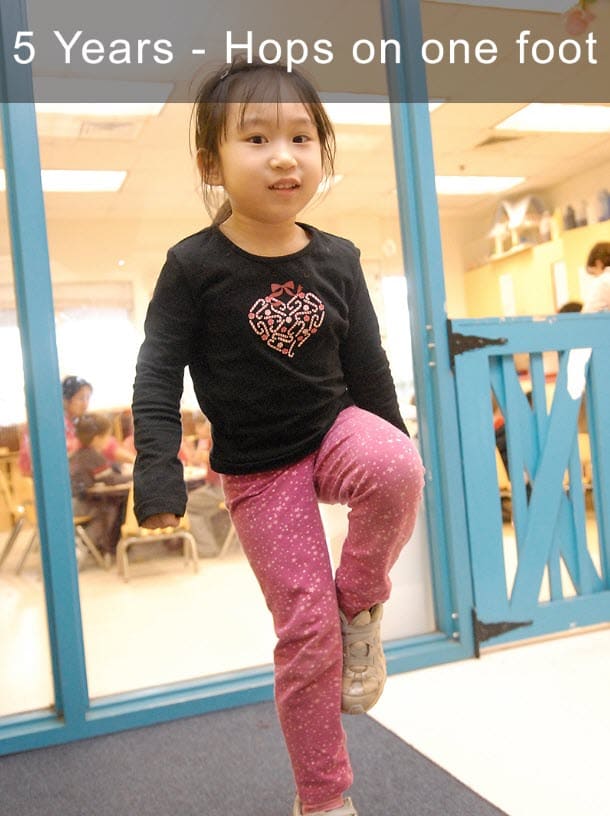
Hops on one foot
Tips and Activities to Support Your Child’s Development at 5 Years
- Your child might start to "talk back" in order to feel independent and test what happens. Limit the attention you give to the negative words. Find alternative activities for her to do that allow her to take the lead and be independent. Make a point of noticing good behavior. "You stayed calm when I told you it's bedtime."
- Ask your child what she is playing. Help her expand her answers by asking "Why?" and "How?" For example, say "That's a nice bridge you're building. Why did you put it there?"
- Play with toys that encourage your child to put things together, such as puzzles and building blocks.
- Use words to help your child begin to understand time. For example, sing songs about the days of the week and let him know what day it is. Use words about time, such as today, tomorrow, and yesterday.
- Let your child do things for himself, even if he doesn't do it perfectly. For example, let him make his bed, button his shirt, or pour water into a cup. Celebrate when he does it and try not to "fix" anything you don't have to.
- Talk about and label your child's and your own feelings. Read books and talk about the feelings characters have and why they have them.
- Play rhyming games. For example, say "What rhymes with cat?"
- Teach your child to follow rules in games. For example, play simple board games, card games, or Simon Says.
- Create a spot in your home for your child to go to when he's upset. Stay nearby so your child knows he is safe and can come to you for help calming as needed.
- Set limits for screen time (TV, tablets, phones, etc.) for your child, to no more than 1 hour per day. Make a media use plan for your family.
- Eat meals with your child and enjoy family time talking together. Give the same meal to everyone. Avoid screen time (TV, tablets, phones, etc.) during mealtime. Let your child help prepare the healthy foods and enjoy them together.
- Encourage your child to "read" by looking at the pictures and telling the story.
- Play games that help with memory and attention. For example, play card games, Tic Tac Toe, I Spy, or Hot and Cold.
- Let your child play with other children, such as at a park or library. Ask about local play groups and pre-school programs. Playing with others helps your child learn the value of sharing and friendship.
- Teach your children about safe touch, such as hugging when both people want to and touches that help keep children healthy (touches from doctors or parents). Unsafe touches are touches that might make a child feel hurt, uncomfortable, scared, or confused. Teach your children that they are in charge of who touches them. Help them practice saying 'no' to unwanted or unsafe touch and let them know there are adults they can turn to for help.
- Teach your child to look for "helpers" if she is lost or needs help, such as parents with children, a store clerk with a badge, or a police officer. Teach your child her name and your name (first and last names).
- Encourage your child to pretend play. Help your child find items she can use to play dress up, school, or house.
- Keep a box of crayons, paper, paint, child scissors, and glue for creative play. Encourage your child to draw and make art projects with different supplies.
- Take your child to the playground. Teach her how to pump her legs back and forth on a swing and help her play on the monkey bars.
- Create a calm, quiet bedtime routine. Avoid any screen time (TV, tablets, phones, etc.) for 1 to 2 hours before bed and don't put any screens in your child's bedroom. Children this age need 10 to 13 hours of sleep a day (including naps). Consistent sleep times make it easier!
- Read to your child. Ask questions, such as "What is happening in the picture?" and "What do you think will happen next?"
- Explore things your child likes. For example, if he loves animals, get some library books about animals, look for birds and squirrels in a park, or visit a zoo to learn about animals.
- Try to make time for active play each day. Your child will have more fun if she can choose the activity. For example, give her choices, such as playing music and dancing together, playing outside, or taking a walk together.
- Your child might start to talk back or use profanity (swear words) as a way to feel independent. Do not give a lot of attention to this talk, other than a brief time out. Instead, praise your child when he asks for things nicely and calmly takes "no" for an answer.
- Help your child be ready for new places and meeting new people. For example, you can read stories or role play (pretend play) to help her get ready for Kindergarten.
Answer a few questions?
Select the age of your child to see their Milestones
6 Months
9 Months

1 Year

15 Months

18 Months

2 Years

30 Months

3 Years

4 Years

5 Years

2 Months