Milestones by 4 Years
Milestones, tips, and images provided by CDC’s Learn the Signs. Act Early. Program.
Social/Emotional Milestones
Pretends to be something else during play (teacher, superhero, dog)
Asks to go play with children if none are around, like “Can I play with Alex?”
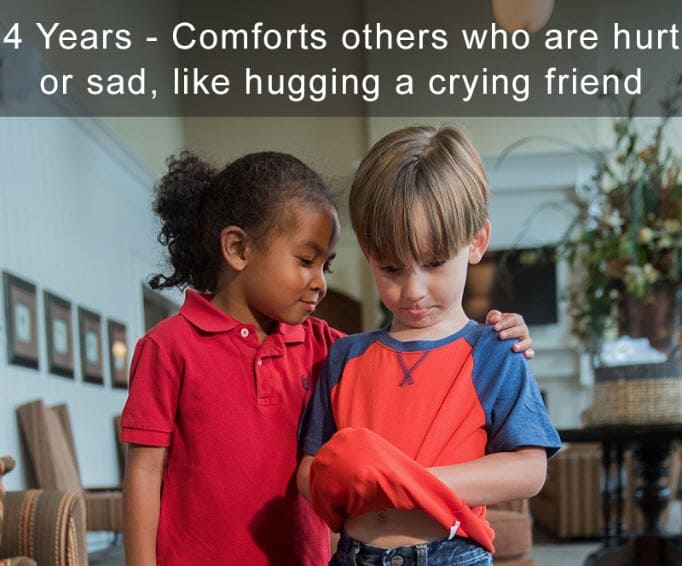
Comforts others who are hurt or sad, like hugging a crying friend
Avoids danger, like not jumping from tall heights at the playground
Likes to be a "helper"
Changes behavior based on where she is (place of worship, library, playground)
Language/Communication Milestones
Says sentences with four or more words
Says some words from a song, story, or nursery rhyme
Talks about at least one thing that happened during her day, like “I played soccer.”
Answers simple questions like “What is a coat for?” or “What is a crayon for?”
Cognitive Milestones (learning, thinking, problem-solving)
Names a few colors of items
Tells what comes next in a well-known story
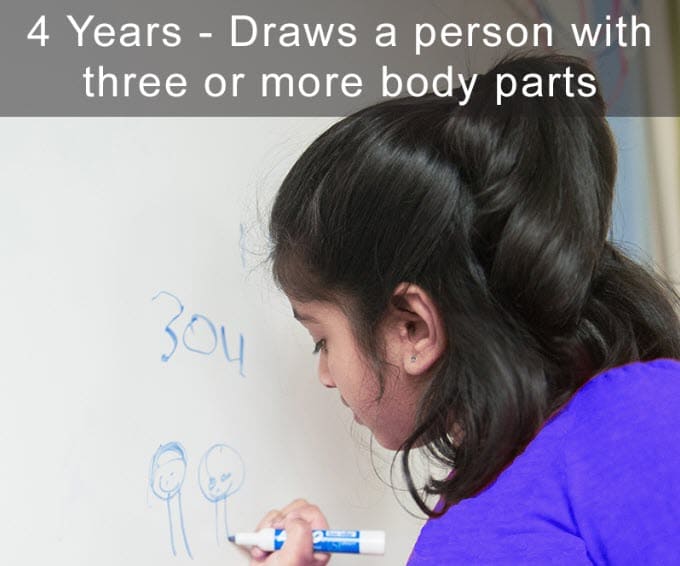
Draws a person with three or more body parts
Movement/Physical Development Milestones
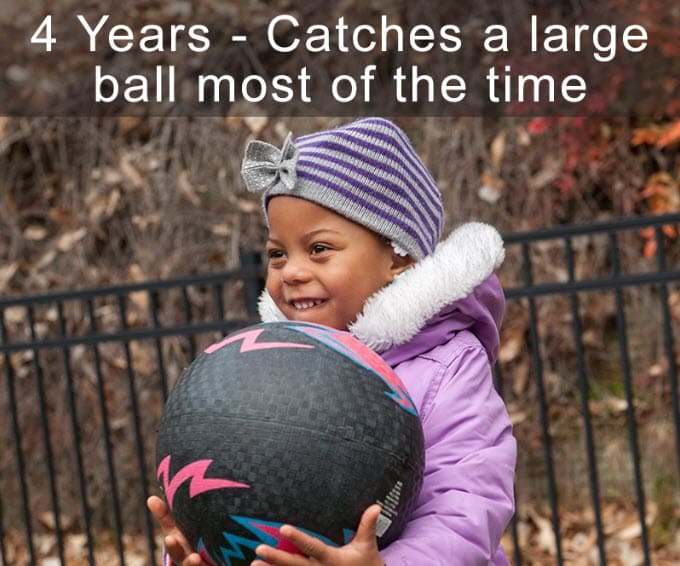
Catches a large ball most of the time
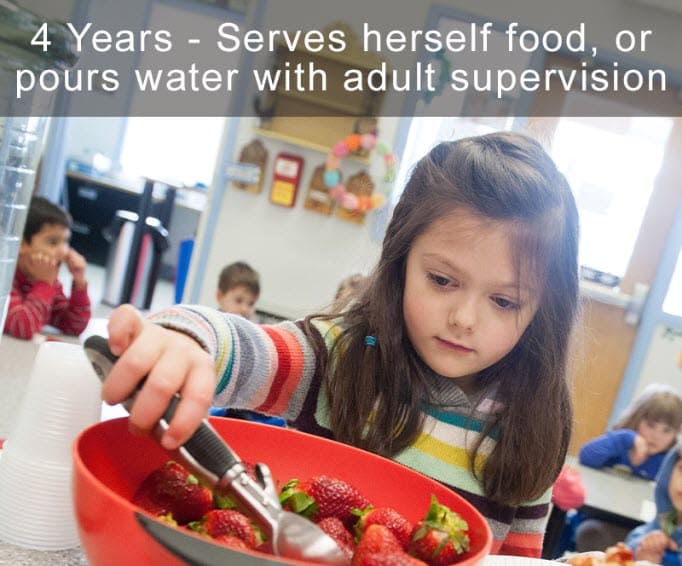
Serves herself food or pours water, with adult supervision
Unbuttons some buttons
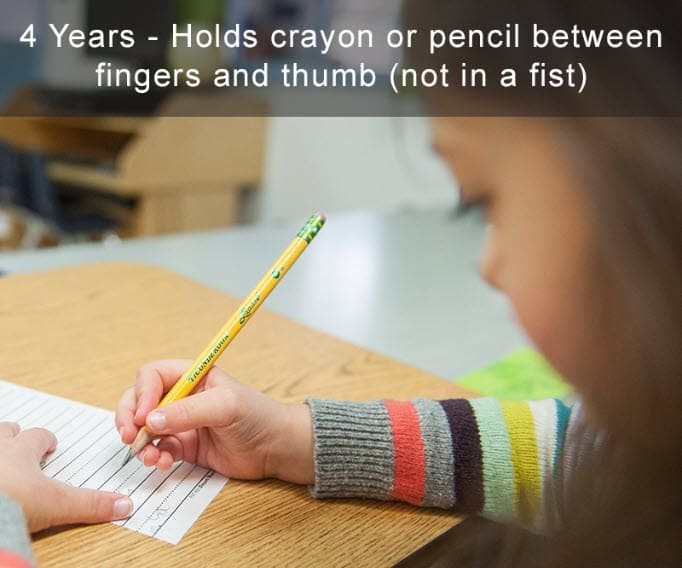
Holds crayon or pencil between fingers and thumb (not a fist)
Tips and Activities to Support Your Child’s Development at 4 Years
- Help your child be ready for new places and meeting new people. For example, you can read stories or role play (pretend play) to help him be comfortable.
- Read with your child. Ask him what's happening in the story and what he thinks might happen next.
- Help your child learn about colors, shapes, and sizes. For example, ask the color, shapes, and size of things she sees during the day.
- Encourage your child to use "his words" to ask for things and solve problems but show him how. He may not know the words he needs. For example, help your child say, "Can I have a turn?" instead of taking something from someone.
- Help your child learn about others' feelings, and about positive ways to react. For example, when he sees a child who is sad, say "He looks sad. Let's bring him a teddy."
- Use positive words and give attention to behaviors you want to see ("wanted behaviors"). For example, say "You're sharing that toy so nicely!" Give less attention to those you don't want to see.
- Tell your child in a simple way why she can't do something you don't want her to do ("unwanted behavior"). Give her a choice of what she can do instead. For example, "You can't jump on the bed. Do you want to go outside and play or put on some music and dance?"
- Let your child play with other children, such as at a park or library. Ask about local play groups and pre-school programs. Playing with others helps you child learn the value of sharing and friendship.
- Eat meals with your child when possible. Let her see you enjoying healthy foods, such as fruits, vegetables, and whole grains, and drinking milk or water.
- Create a calm, quiet bedtime routine. Avoid any screen time (TV, phone, tablet, etc.) for 1 to 2 hours before bed and don't put any screens in your child's bedroom. Children this age need 10 to 13 hours of sleep a day (including naps). Consistent sleep times make it easier!
- Give your child toys or things that encourage his imagination, such as dress-up clothes, pots and pans to pretend cook, or blocks to build with. Join him in pretend play, such as eating the pretend food he cooks.
- Take time to answer your child's "why" questions. If you don't know the answer, say "I don't know," or help your child find the answer in a book, on the Internet, or from another adult.
- Count simple things, such as fingers, toys, or bananas. This will help your child learn about numbers and counting.
- Give your child choices that are simple and healthy. Let her choose what to wear, play, or eat for a snack. Limit choices to 2 or 3.
- Continue to teach your child skills to play with others, such as using words, sharing toys, and taking turns.
- Teach your child to play outdoor games with friends, such as tag, follow the leader, and hide and seek.
- Spend time speaking to your child in complete sentences, using "grown-up" words. This will help her learn better speaking skills and helps with future reading and writing skills.
- Let your child help with simple chores, such as bringing in the mail, feeding a pet, or wiping down tables. This helps build independence.
- Teach your child to stop and wait when excited by playing red light, green light, or freeze dance (play music, turn it off, and have everyone freeze when it stops).
- Play your child's favorite songs and dance with your child. Take turns copying each other's moves.
- Give your child time to solve her own problems with friends. For example, if they are arguing over who gets to be which superhero, let them work it out. Stay nearby to help if needed. If they can't work it out, use questions to help them think of other solutions.
- Use words, such as "first," "second," and "finally." When playing, telling stories, or doing chores, ask your child what comes next. This will help your child learn about the order of events.
- Comfort your child if he is afraid and talk about his fears. For example, "Monsters can feel scary even though they are not real and can't hurt you." Help your child learn things he can do when he is afraid, such as hugging a stuffed animal.
- Play simple games, such as Tic-Tac-Toe or matching games.
- Try to make time for active play each day. Your child will have more fun if she can choose the activity. For example, give her choices, such as playing music and dancing together, playing outside, or taking a walk together.
- Help your child notice when he hurts someone's feelings by describing what you see. Encourage him to say sorry and help him find a way to make the person feel better.
- Take trips to the library to let your child pick out books.
- Limit screen time (TV, tablets, phones, etc.) to no more than 1 hour per day of a children's program with an adult present. Don't put any screens in your child's bedroom. Children learn by talking, playing, and interacting with others.
Answer a few questions?
Select the age of your child to see their Milestones
6 Months
9 Months

1 Year

15 Months

18 Months

2 Years

30 Months

3 Years

4 Years

5 Years

2 Months